 Cartilage
 Knees
Knees Hip
Hip Shoulder
Rebuilding Mobility After ChondroFiller Treatment
28/02/26


Introduction
Knee osteoarthritis (OA) is a common and often debilitating condition, caused by the gradual wear and tear of the cartilage that cushions the knee joint. Many people with knee OA will experience stiffness, pain, and difficulty moving. For some, these symptoms are further complicated by issues with the kneecap’s (patella’s) movement — known as patellar tracking problems. When the kneecap doesn’t glide smoothly or becomes unstable, it can worsen pain and reduce mobility, making everyday activities even more challenging. It is therefore vital to address these specific kneecap-related problems to enhance comfort and function. One promising treatment gaining attention is Arthrosamid, a novel gel-like injection designed to improve joint comfort and support daily knee movement, especially for those with combined OA and patellar tracking difficulties.
Patellar tracking refers to the path the kneecap follows as the knee bends and straightens. Ideally, the patella slides smoothly within a groove on the thigh bone (femur). However, in many people with knee OA, this movement becomes disrupted. The kneecap may shift out of place (known as maltracking or instability), which increases the pressure and stress on the joint surfaces, causing more pain and accelerating joint damage.
Interestingly, prolonged dislocation or sustained misplacement of the patella is uncommon but can be linked to severe knee OA, particularly affecting the femorotibial joint — the junction between thigh and shin bones. Such cases highlight how patellar instability and OA often go hand in hand, making the condition more complex to manage (Kumagai et al., 2017).
For those facing both OA and patellar tracking issues, daily tasks like climbing stairs, standing up from a chair, or walking on uneven surfaces can become daunting. The fear of knee ‘giving way’ or experiencing sharp discomfort can reduce confidence, limiting movement and social activities that are vital for overall health. Managing these intertwined problems requires treatments that specifically target both the joint wear and the patella’s alignment to restore comfort and improve function.
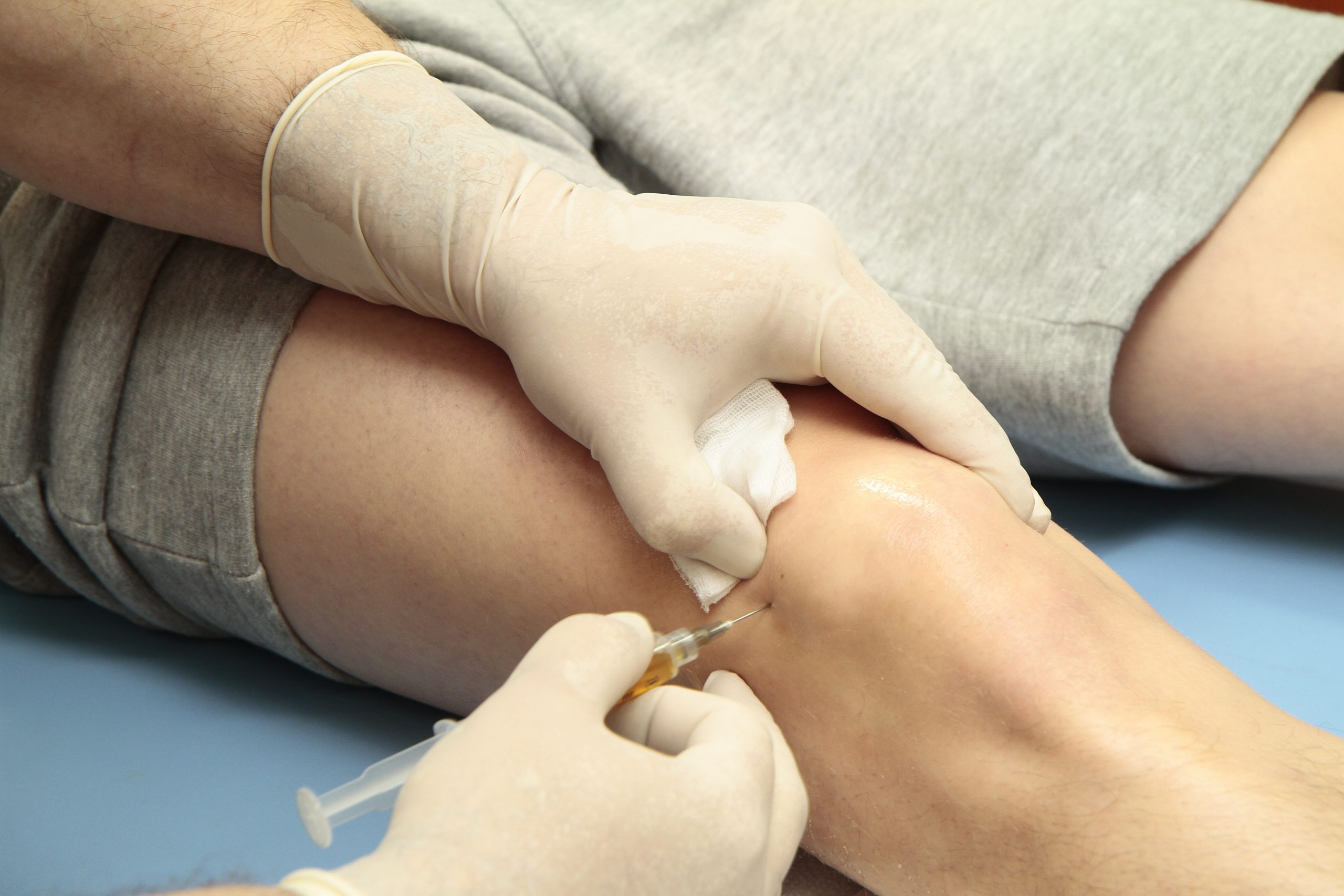
Arthrosamid is a biocompatible hydrogel — a soft, gel-like substance — that is injected directly into the knee joint. Its primary role is to enhance lubrication within the joint, reducing friction that occurs when the knee moves. This can ease pain and stiffness. Additionally, Arthrosamid’s cushioning effect may help the kneecap glide more smoothly, potentially easing the irritation caused by maltracking.
While Arthrosamid is increasingly used for knee OA, research emphasises the importance of choosing the right patients for this treatment. One study points out that “which patients would incur the most benefit from Arthrosamid is limited,” underlining the need for careful assessment to ensure the best outcomes.
That said, Arthrosamid appears particularly well-suited for those with moderate OA combined with kneecap instability, offering a non-surgical option to relieve symptoms related to both cartilage wear and patellar misalignment. Its lasting presence within the joint, compared to other injectable treatments, may provide more sustained comfort and improved knee function.
Treating knee OA and patellar tracking problems works best when combining Arthrosamid injections with targeted rehabilitation. Building strength in the muscles around the knee — especially the quadriceps and hip muscles — supports the kneecap’s proper alignment and improves stability. Gentle, personalised exercises help reduce strain on the joint and encourage smoother patella movement.
At centres like the London Cartilage Clinic, led by Professor Paul Lee, patients have access to this comprehensive approach. Here, advanced treatments such as Arthrosamid are combined with tailored physiotherapy aimed at restoring strength, confidence, and mobility. Patients receive support to regain independence in everyday tasks like climbing stairs and walking, fostering long-term benefits.
In more severe cases, surgical options may be necessary. For example, one rare but insightful case showed that “lateral patellar retinaculum release helped achieve stable patellar tracking during total knee replacement in patients with long-standing patellar dislocation and OA” (Kumagai et al., 2017). This highlights how treatment plans must be customised, ranging from conservative therapies to surgery depending on the individual’s condition.
If you’re considering Arthrosamid for knee OA with kneecap tracking problems, a thorough evaluation by a healthcare professional is crucial. Because every patient’s situation is unique, treatment should be tailored to your specific symptoms, severity of OA, and patellar alignment issues. It’s also important to have realistic expectations — while many patients experience significant relief and better function, Arthrosamid is not a cure and results can vary.
The research community continues to investigate which patients will benefit most, and as noted, “the literature surrounding which patients would incur the most benefit from Arthrosamid is limited.” This makes close collaboration with your clinical team essential to ensure you receive the most suitable care.
Clinicians like Professor Paul Lee and his team at the London Cartilage Clinic combine their extensive experience and latest therapies to guide patients through personalised treatment plans. Their patient-centred approach focuses on improving quality of life, helping you manage symptoms and maintain mobility.
Conclusion and Disclaimer
To sum up, Arthrosamid offers an exciting treatment avenue for many living with knee osteoarthritis complicated by patellar tracking issues. By enhancing joint lubrication and potentially supporting smoother kneecap movement, it can reduce discomfort and help maintain daily function. When combined with muscle strengthening and expert clinical care, Arthrosamid forms part of a well-rounded approach to managing complex knee problems. Always speak to a qualified healthcare professional for advice tailored to your individual needs.
For individual medical advice, please consult a qualified healthcare professional.
Gao, H. C. K., Akhtar, M., Creedon, C., Nar, Ö. O., & Lee, P. Y. (2025). THE IMPACT OF PATIENT FACTORS ON THE MINIMAL CLINICALLY IMPORTANT DIFFERENCE OF ARTHROSAMID POLYACRYLAMIDE HYDROGEL INJECTION FOR KNEE OSTEOARTHRITIS: A COHORT STUDY. Journal of Osteoarthritis and Cartilage. https://doi.org/10.1016/j.joca.2025.02.648
Kumagai, K., Kubo, M., Maeda, T., Araki, S., Shioji, S., Okumura, N., Fujikawa, H., Kawasaki, T., Imai, S., & Matsusue, Y. (2017). Total knee arthroplasty for treatment of osteoarthritis with prolonged patellar dislocation. Arthroplasty Today, 3(1), 25-28. https://doi.org/10.1016/j.artd.2016.10.001
The London Cartilage Clinic, led by Professor Paul Lee, offers advanced treatments combining Arthrosamid injections and tailored rehabilitation, ensuring comprehensive care from an internationally recognised cartilage expert and surgical ambassador dedicated to improving patients’ mobility and quality of life.
Professor Paul Lee is a leading cartilage expert and Royal College of Surgeons ambassador and advisor. His extensive experience ensures that patients receive personalised, evidence-based treatment plans, making use of the latest therapies for complex knee osteoarthritis and patellar tracking issues.
Arthrosamid is a biocompatible hydrogel injection designed to enhance lubrication and cushioning within the knee joint. For individuals with both osteoarthritis and kneecap instability, it may reduce pain and stiffness, supporting smoother patellar movement and improving overall function.
Every patient’s knee osteoarthritis and patellar tracking problems are different. At the London Cartilage Clinic, Professor Lee customises treatment—including Arthrosamid and physiotherapy—to each individual, ensuring therapies address specific symptoms, cartilage damage, and alignment concerns for optimal outcomes.
Patients should have a thorough assessment by a qualified expert like Professor Lee, as effectiveness depends on individual symptoms and alignment. Combining specialist evaluation and advanced therapies ensures a holistic, patient-focused approach with realistic expectations for relieving pain and improving mobility.
All our treatments are selected to help patients achieve the best possible outcomes and return to the quality of life they deserve. Get in touch if you have any questions.
At London Cartilage Clinic, we are constantly staying up-to-date on the latest treatment options for knee injuries and ongoing knee health issues. As a result, our patients have access to the best equipment, techniques, and expertise in the field, whether it’s for cartilage repair, regeneration, or replacement.
For the best in patient care and cartilage knowledge, contact London Cartilage Clinic today.
At London Cartilage Clinic, our team has spent years gaining an in-depth understanding of human biology and the skills necessary to provide a wide range of cartilage treatments. It’s our mission to administer comprehensive care through innovative solutions targeted at key areas, including cartilage injuries. During an initial consultation, one of our medical professionals will establish which path forward is best for you.
Contact us if you have any questions about the various treatment methods on offer.
Legal & Medical Disclaimer
This article is written by an independent contributor and reflects their own views and experience, not necessarily those of londoncartilage.com. It is provided for general information and education only and does not constitute medical advice, diagnosis, or treatment.
Always seek personalised advice from a qualified healthcare professional before making decisions about your health. londoncartilage.com accepts no responsibility for errors, omissions, third-party content, or any loss, damage, or injury arising from reliance on this material. If you believe this article contains inaccurate or infringing content, please contact us at [email protected].